
Thank you for Subscribing to Gov Business Review Weekly Brief

Montrose Urban Renewal Authority
William Bell, City Manager, City of Montrose, CO and Executive Director
A New Playbook For Modern City Management
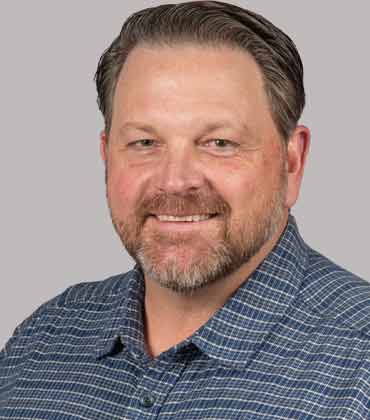
William Bell
My journey into city management has been anything but conventional. I did not begin with a clear roadmap toward municipal leadership. In fact, my early academic focus was in criminal psychopathology, studying extreme human behavior, followed by time in law school and an initial plan to join the Secret Service. That path shifted after the events of September 11, which redirected me into public service at the state level. From there, I pursued a master’s in public administration while teaching and working in a forensic psychiatric setting.
Those experiences, though seemingly unrelated, shaped how I approach leadership today. They taught me how to understand people, navigate complexity and make decisions under pressure. When I stepped into my first city management role in a small town, I quickly realized the unique impact this profession offers. Every decision directly affects residents’ lives. That level of responsibility is both humbling and energizing. Over the past 23 years, including 15 in Montrose, I have remained driven by the core goal of delivering traditional government services in non-traditional ways that are faster, more innovative and more responsive to community needs. Leading with Alignment, Trust and Accountability As a city manager, my primary responsibility is overseeing operations and administration across the organization. In a council-manager form of government, that means ensuring that the direction set by elected officials translates effectively into day-to-day execution. With approximately 220 full-time employees (nearly 300 total) and multiple departments, alignment is critical. I serve as the bridge between our city council and staff. I spend considerable time maintaining that relationship, including regular one-on-one communication with council members and actively forecasting the community’s response to major decisions, ensuring that what the council hears from the community is reflected in our priorities and actions. I also encourage direct, transparent access between department heads and elected officials, which is a more open model than traditional municipal structures. That openness builds trust, reduces silos and creates a more cohesive organization. Internally, we operate through highly collaborative structures. Functional team meetings bring together leaders across human resources, infrastructure, development, community engagement and operations to address complex challenges collectively. This approach ensures that decisions reflect a holistic, real-time view of community needs.Every decision we make directly impacts the lives of our residents, and that responsibility drives everything we do.
 We emphasize performance over tenure. I do not believe time-served should dictate compensation alone. Rather than relying solely on traditional compensation models, we reward employees based on measurable contributions. This approach encourages a culture where excellence is expected and recognized. At the same time, we invest heavily in collaboration, ensuring that departments work together rather than in silos.
Innovation is embedded in how we operate. One example is our “one-stop shop” approach for development projects, where all key stakeholders come together early in the process. What typically takes 6 to 9 months, or even longer in many cities, we complete in 45 to 90 days. Developers consistently tell us we are the fastest city they have worked with. This is a structural shift in how government operates.
We have also streamlined our city code to make it more accessible and user-friendly. By removing unnecessary complexity, we empower businesses and residents to engage more effectively with local government. Our goal is to eliminate red tape without compromising accountability.
Future-Ready Infrastructure and Financial Stewardship
Sustainability and resilience are central to how we plan for the future. We take a fiscally conservative approach while maintaining the flexibility to act on new opportunities. Unlike many municipalities, we base our budgets on prior-year actual revenues rather than projections, which consistently create surplus flexibility.
This strategy has enabled us to make bold, long-term infrastructure investments. These are not incremental upgrades, but generational investments. We have developed a $26 million public safety complex, a $70 million public works facility currently underway, and $35 million in wastewater system upgrades to meet future regulatory demands.
We have also revitalized our downtown with a new city hall, many grant programs for commercial kitchen creation, façade improvements, historic preservation, and small business development, and we have supported community assets like the Montrose Rotary Amphitheater, which accommodates 5,000 to 10,000 attendees and our Water Sports Park facility, reinforcing quality of life alongside infrastructure.
In addition, we increased our lodging tax from under 1 to 6 percent, still among the lowest in the state, to fund critical priorities such as affordable housing, childcare, public transit, street maintenance and tourism development.
We emphasize performance over tenure. I do not believe time-served should dictate compensation alone. Rather than relying solely on traditional compensation models, we reward employees based on measurable contributions. This approach encourages a culture where excellence is expected and recognized. At the same time, we invest heavily in collaboration, ensuring that departments work together rather than in silos.
Innovation is embedded in how we operate. One example is our “one-stop shop” approach for development projects, where all key stakeholders come together early in the process. What typically takes 6 to 9 months, or even longer in many cities, we complete in 45 to 90 days. Developers consistently tell us we are the fastest city they have worked with. This is a structural shift in how government operates.
We have also streamlined our city code to make it more accessible and user-friendly. By removing unnecessary complexity, we empower businesses and residents to engage more effectively with local government. Our goal is to eliminate red tape without compromising accountability.
Future-Ready Infrastructure and Financial Stewardship
Sustainability and resilience are central to how we plan for the future. We take a fiscally conservative approach while maintaining the flexibility to act on new opportunities. Unlike many municipalities, we base our budgets on prior-year actual revenues rather than projections, which consistently create surplus flexibility.
This strategy has enabled us to make bold, long-term infrastructure investments. These are not incremental upgrades, but generational investments. We have developed a $26 million public safety complex, a $70 million public works facility currently underway, and $35 million in wastewater system upgrades to meet future regulatory demands.
We have also revitalized our downtown with a new city hall, many grant programs for commercial kitchen creation, façade improvements, historic preservation, and small business development, and we have supported community assets like the Montrose Rotary Amphitheater, which accommodates 5,000 to 10,000 attendees and our Water Sports Park facility, reinforcing quality of life alongside infrastructure.
In addition, we increased our lodging tax from under 1 to 6 percent, still among the lowest in the state, to fund critical priorities such as affordable housing, childcare, public transit, street maintenance and tourism development.
 These decisions reflect a long-term mindset. We are not building for the next budget cycle. We are building for the next 50 to 100 years.
Leadership Lessons and Advice for the Next Generation
Over the years, my perspective on leadership has evolved significantly. Early in my career, I believed success meant being involved in everything. Experience taught me otherwise. Real impact comes from hiring the right people, trusting them and creating an environment where they can thrive. Delegation is not a loss of control, it is a force multiplier.
Communication has been another critical area of growth. Early in my career, I struggled with public speaking to the point of avoiding it altogether. Learning to overcome that fear and engage directly with large audiences fundamentally changed my effectiveness as a leader. Transparency and the ability to clearly articulate vision and progress are essential for building trust.
For those aspiring to lead in this space, my advice is grounded in integrity and resilience. Integrity today is not just about doing the right thing when no one is watching. It is about doing the right thing when everyone is watching. The scrutiny is constant, and the pressure can be intense, but staying true to your values is non-negotiable.
You must also learn to navigate criticism without losing focus. Not every decision will be popular, and trying to please everyone is neither realistic nor productive. Instead, focus on what is best for the entire community. Build strong partnerships, stay aligned with your mission and remain committed to long-term impact.
City management is challenging, but it offers a rare opportunity to shape communities in meaningful ways. If you approach it with purpose, integrity and a willingness to adapt, the impact you can create is lasting and profound.
These decisions reflect a long-term mindset. We are not building for the next budget cycle. We are building for the next 50 to 100 years.
Leadership Lessons and Advice for the Next Generation
Over the years, my perspective on leadership has evolved significantly. Early in my career, I believed success meant being involved in everything. Experience taught me otherwise. Real impact comes from hiring the right people, trusting them and creating an environment where they can thrive. Delegation is not a loss of control, it is a force multiplier.
Communication has been another critical area of growth. Early in my career, I struggled with public speaking to the point of avoiding it altogether. Learning to overcome that fear and engage directly with large audiences fundamentally changed my effectiveness as a leader. Transparency and the ability to clearly articulate vision and progress are essential for building trust.
For those aspiring to lead in this space, my advice is grounded in integrity and resilience. Integrity today is not just about doing the right thing when no one is watching. It is about doing the right thing when everyone is watching. The scrutiny is constant, and the pressure can be intense, but staying true to your values is non-negotiable.
You must also learn to navigate criticism without losing focus. Not every decision will be popular, and trying to please everyone is neither realistic nor productive. Instead, focus on what is best for the entire community. Build strong partnerships, stay aligned with your mission and remain committed to long-term impact.
City management is challenging, but it offers a rare opportunity to shape communities in meaningful ways. If you approach it with purpose, integrity and a willingness to adapt, the impact you can create is lasting and profound.
The articles from these contributors are based on their personal expertise and viewpoints, and do not necessarily reflect the opinions of their employers or affiliated organizations.
