

Thank you for Subscribing to Gov Business Review Weekly Brief

Township Of Lakewood
Patrick Donnelly, Municipal Manager
Building what’s Next while Managing what’s Now
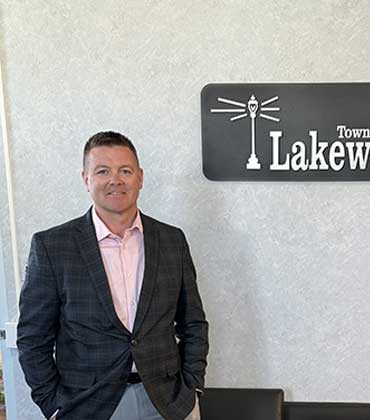
Patrick Donnelly
Leadership is not about telling someone what to do. It is about helping them understand why something matters and giving them the tools to succeed.” Patrick Donnelly serves as Municipal Manager for Lakewood, New Jersey’s fourth-largest and fastest-growing municipality, supporting over 160,000 residents. He oversees more than 570 employees and a $167 million budget, managing 24/7 operations. His responsibilities span municipal oversight, emergency management support, intergovernmental coordination, and strategic growth planning.
Running a Township That Never Slows Down As Municipal Manager in Lakewood, I oversee more than 570 employees in one of the fastest-growing communities in the state. Lakewood has a large Orthodox Jewish population, which brings unique rhythms with holidays, travel, and daily activity. It does not define how I lead, but it requires awareness and flexibility in how we serve residents. Alongside that, I oversee a municipal budget of roughly $167 million and support critical functions like emergency management at a high level, ensuring teams have the resources they need without overstepping operational expertise. I also serve as a liaison with external agencies to secure resources that match the pace of our growth, while balancing expansion with fiscal discipline and preserving the character of the community. The last census recorded about 130,000 residents, but in reality, we are closer to 160,000 to 170,000 and growing quickly. We are the fourth-largest municipality in New Jersey, and I expect we will be among the top two within the next few years. That growth creates constant change. Every day, we manage high-volume operations across departments, vendors, and services, including tax collection, assessment, clerical functions, and vital statistics. We issue one of the highest numbers of marriage licenses in the state, second only to Newark. My leadership approach is grounded in trust and awareness. “I do not micromanage. I stay attuned to how my department heads and their teams operate and step in when support is needed. I lead rather than direct, based on what I know was valuable in my own career,” says Patrick Donnelly. Consistency is critical. Even under pressure or frustration, I do not stray from that approach. Employees need to feel supported, valued, and secure. That stability drives performance. This role is constant. The township does not stop, and neither do the demands. Communication is ongoing, and responsibilities continue as the community grows. I rely on a strong team, including a COO who also serves as HR director, along with HR staff and administrative support. I trust them fully. I believe in empowering capable people. I want individuals who are knowledgeable, growing, and committed. Building that circle of trust allows us to manage the scale and pace of Lakewood’s growth. From Street-Level Insight to System-Level Impact In Lakewood, alignment starts with experience. I came up through the ranks, starting on the back of a trash truck and eventually becoming a DPW director. Along the way, I invested in continuing education through Rutgers University, which shaped how I approach growth, sustainability, and operations. At one point, Lakewood was behind when it came to technology. Today, we are leading because we made a conscious decision to think ahead instead of trying to catch up. We take an integrated approach. We leverage tools like the Urban Enterprise Zone, free trade opportunities, and strong industrial development to drive business growth while investing in infrastructure and services to support it. We built our own in-house transit system about five to six years ago and strengthened community outreach to stay connected. That system continues to evolve as the community grows. We are already working with external transportation partners to expand capacity because we are becoming a highly walkable and transit-reliant town with increasing congestion. Every investment we make is filtered through a simple lens: it has to improve safety or efficiency. If it does not do either, it does not move forward. Sustainability is not just about grants. It is about how you use resources and who you trust to execute. We focus heavily on maintaining infrastructure because it directly impacts safety, service delivery, and long-term growth. At the same time, we train people at every level to ensure continuity and redundancy. I also believe in learning from our business community and creating a two-way exchange of ideas that benefits everyone. On the financial side, I work closely with our CFO to forecast needs, identify funding opportunities, and ensure every dollar we spend delivers clear value to our stakeholders. That discipline allows us to grow while staying within real constraints. It comes down to using every available resource to work smarter, not harder. We are also disciplined in how we execute. If we start something, we make sure we can finish it. That requires a clear financial path from the beginning, not just a good idea. Innovation is a major driver. Our Smart City initiative is about connectivity across the township, and we are about three-quarters complete. A major part of that effort is ensuring connectivity for everyone, regardless of access or affordability, while also being mindful of community concerns around privacy and technology. It is not just about implementing tools; it is about building trust in how they are used. That includes intelligent traffic systems that adjust signals in real time to manage congestion and AI-based infrastructure monitoring that helps us identify road issues before they become larger problems. We use AI-driven routing in public works to improve efficiency, not just speed. Our police department uses advanced systems and drones to reduce response times in a high-traffic environment. We have also invested in EV infrastructure and green energy and combined strong internal teams with external experts to ensure we are implementing solutions the right way, not just quickly. We are focused on creating a self-sustaining community. Near the Jersey Shore BlueClaws stadium, we have developed Class A commercial spaces that have helped generate tens of thousands of jobs. We are building a place where people can live, work, and access what they need without leaving, while still maintaining strong regional access. “We also challenge the traditional mindset of government,” says Donnelly. “Instead of looking for reasons something cannot be done, we focus on finding a way to make it work.” That shift alone changes outcomes. I approach this role with the mindset of running an organization, not just a government. Every decision has to deliver value and improve quality of life for the people we serve. What makes it work is that we stay ahead. We are not chasing trends. During the COVID-19 pandemic, that mindset allowed us to adapt quickly, test new ideas, support businesses, and keep operations moving without disruption. Not everything works, but we are willing to take smart risks, cut through red tape, and keep improving. Some of these initiatives are not proven. There is always risk. But having the support of leadership and alignment across the organization allows us to take those risks responsibly and build toward long-term results. At the end of the day, this is a team effort across government and the community. That trust, combined with innovation and execution, is what keeps Lakewood moving forward and positions us as a model for others. Stop Directing, Start Leading The biggest lesson I’ve learned is that leadership is never an individual effort. I have worked with people at every level, from those who are easy to work with to those who challenge you every day, and I have learned from all of them. I have also surrounded myself with people I respect, including mentors I have brought onto my own team. That circle, both personally and professionally, is everything. When people ask how I got here, they expect a formula. There isn’t one. It is hard work, long hours, and strong support at home, but more than anything, it is understanding that you cannot do this alone. The moment you think you can, you start limiting your own impact.I do not Micromanage. I Stay Attuned to how my Department Heads and their Teams Operate and Step in when Support is Needed. I Lead Rather than Direct, Based on What I Know was Valuable in My own Career.
The articles from these contributors are based on their personal expertise and viewpoints, and do not necessarily reflect the opinions of their employers or affiliated organizations.
