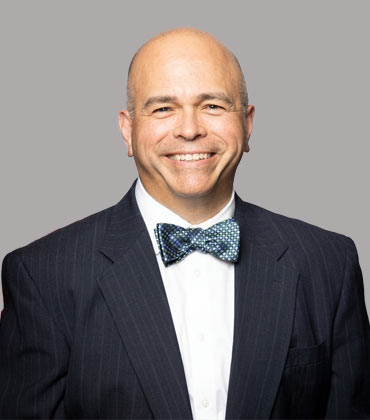
Jim Barnes
Public Service StewardLeadership That Builds Capacity and Community Trust
When I look back on 23 years with the Village of Wellington, one thing strikes me most: how different my understanding of leadership is today than when I started. I didn’t come to Wellington with a plan to become Village Manager. I was fortunate to find a community where I enjoyed the work, believed in what we were doing and continued to be given opportunities to take on more responsibility.
I’ve had the privilege of watching Wellington grow and change while growing and changing with it. That experience taught me that leadership is less about having all the answers or solving every problem and more about building an organization where good people can do great work, developing future leaders and creating the capacity to keep moving forward.
Early in my career, I measured my value by the problems I could solve. As I took on more responsibility, I realized that wasn’t sustainable. My job wasn’t to have all the answers. It was to build a team that could identify problems, solve them and make good decisions even when I wasn’t in the room.
One benefit of spending this much time in one community is seeing the consequences of decisions over time. You see ideas become projects and decisions made years ago create opportunities, or challenges, for the people who come after you. That perspective has reinforced that local government is fundamentally about stewardship.
I’ve also come to realize that none of us owns the community we serve. We are entrusted with its care for a period of time. Our responsibility is to leave it a little stronger, more resilient and better prepared for the next generation than we found it.
Aligning Community Needs with Organizational Priorities
For me, alignment begins with listening. Before budgets are developed, strategic plans are written or projects are prioritized, leaders need to understand what matters most to the people they serve.
A budget is much more than a financial document. It is one of the clearest expressions of a community’s values. Every investment reflects a choice about the kind of community we are building and the legacy we hope to leave behind. I believe successful local government exists at the intersection of three priorities: community expectations, organizational capacity and fiscal responsibility. When those are aligned, government earns trust because residents can see that resources are invested thoughtfully and with purpose.
Before budgets are developed, strategic plans are written or projects are prioritized, leaders need to understand what matters most to the people they serve.
Growth itself has never been the objective. The objective is creating and sustaining an exceptional quality of life. Whether we’re investing in infrastructure, parks, public safety, utilities, recreation, environmental preservation or economic opportunity, every decision should strengthen the community’s long-term health and resilience. Alignment doesn’t happen simply because you draw right organizational chart. It happens through culture. Employees need to understand the mission, know how their work contributes to it and feel trusted to make decisions. My responsibility is to create that environment and then get out of the way enough for good people to lead.
Preparing Local Government for the Future
Artificial intelligence will change how local governments work. The question isn’t whether it will; it’s how we use it responsibly. It can improve efficiency, customer service and decision-making. But technology doesn’t understand a community the way people do. It can’t replace judgment, relationships, empathy or accountability. Those remain at the heart of public service.
An organization that depends too heavily on one person isn’t a strong organization. Strong organizations are built by mentoring future leaders, encouraging innovation and creating opportunities for people to take responsibility.
Stewardship is also about doing the right thing today even when the benefit won’t be visible for years. The public may not notice the infrastructure investment that prevents a failure, the financial planning that provides flexibility or the time spent developing an employee who may eventually lead the organization. But those investments matter.
Balancing Today’s Demands with Tomorrow’s Vision
One of the most important leadership lessons I’ve learned is that every urgent issue deserves attention, but not every urgent issue should become the organization’s priority. Local government operates where immediate needs constantly compete with longterm objectives. A water main breaks. A storm approaches. An unexpected opportunity emerges. Those situations require decisive action.
We always have to ask ourselves “How will this decision serve our community not only today, but ten or twenty years from now?” That doesn’t mean we can always make the decision that is best ten or twenty years from now. Sometimes today’s problem has to be solved today. But even when responding to an immediate need, we should understand the consequences and avoid creating tomorrow’s problem while solving today’s.
Communities are shaped by thousands of decisions made over time. Every investment, policy, partnership and budget decision contributes to the community our residents, and ultimately the next generation, will inherit.
Developing the Next Generation of Public Leaders
Never lose sight of why local government matters. Most people don’t experience government through legislation or policy debates. They experience it through their neighborhoods, the safety of their streets, reliable utilities, parks and the responsiveness of the people serving them.
If I could offer one piece of advice to someone entering this profession, it would be to stay curious. Listen more than you speak. Spend time in the field with team members and residents. Learn the budget, because every leader should understand how resources are allocated. Learn to communicate, because even the best decisions require trust and understanding. And never become so convinced that you have the answers that you stop listening.
After 23 years in Wellington, I’ve come to believe that one of the most important measures of a leader isn’t what happens while you’re in the room. It’s what happens when you’re not. If you’ve developed capable people who understand the mission, care about the community and are willing to take responsibility, you’ve built something that can last.
I’ve also become convinced that communities don’t flourish because of any one individual. They flourish because public servants, residents, elected officials, businesses, schools, nonprofit organizations and community partners work together toward a shared vision.
Wellington isn’t mine to run. It belongs to the people who live here. My responsibility, and the responsibility of every person privileged to serve this community, is to take care of it while we’re here and leave it stronger for the people who come next.
At its best, local government is about helping people build lives, raise families, create opportunities and feel a genuine sense of belonging in a community they’re proud to call home. After 23 years, I still believe that is the work, and the privilege, of public service.