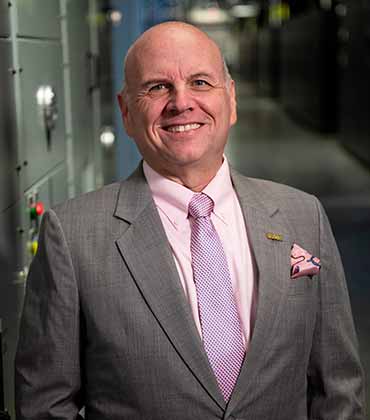
Buddy Rizer
Economic Growth AuthorityBuddy Rizer is a strategic economic development leader known for driving Loudoun County’s growth into a global data center hub. With expertise in business expansion, technology infrastructure and public policy, he has played a major role in attracting billion-dollar investments and strengthening regional economic development.
As Executive Director of Economic Development for Loudoun County, my role is to position the county for long-term economic success while aligning growth with the priorities of residents and the Board of Supervisors. That work includes business recruitment, business retention, international business development, entrepreneurship, workforce initiatives, and rural economic development. The objective is to maintain a comprehensive strategy that balances economic opportunity with stewardship.
Over the past two decades, Loudoun County has seen more than USD 65 billion in commercial investment and 60,000 announced jobs. During that period, we focused on diversifying the economy across aerospace, cybersecurity, life sciences, advanced manufacturing, logistics, and digital infrastructure. Alongside large-scale business recruitment, we created Launch Loudoun to support small businesses as they start, scale and soar, ensuring that economic growth benefits the broader community.
In that time, we increased the commercial tax base from roughly 19 percent to more than 50 percent of the county’s total tax base. That growth reduced the tax burden on residents while supporting investments in public infrastructure and community programming.
Growth, Transparency and Long-Term Competitiveness
My approach to economic development has always focused on long-term competitiveness rather than short-term wins. Loudoun County’s growth has been built through policy consistency, infrastructure investment, and public-private collaboration over decades.
One of our most significant achievements has been creating an environment that has borne the world’s largest concentration of data centers. The number of schools, roads, and public facilities funded by data center tax revenue, along with steady job creation reflects a strategy focused not just on today, but on the future. At the same time, that growth required careful attention to sustainability and quality of life. Economic development should strengthen communities financially while preserving the conditions that make those communities desirable places to live.
That is why I coined the phrase “structured transparency.” Economic growth creates benefits and challenges, and leaders must communicate both clearly. Structured transparency means explaining the facts, acknowledging uncertainty, communicating openly, and incorporating public input into the process. Public trust becomes critical when communities are experiencing rapid growth, and Loudoun has worked hard to earn and maintain that trust throughout this period of extraordinary change.
Economic development is ultimately about community, people and opportunity, and long-term sustainability.
The pace of economic change continues to accelerate, particularly as artificial intelligence advances and industry demands evolve. Economic development organizations cannot operate on a static playbook, as technological shifts are happening faster than ever before. We have to remain adaptable and continuously look for new opportunities as industries evolve and workforce needs change in real time.
We work closely with the community, four-year colleges, and K-12 systems to prepare students for a changing labor market while exposing them to a broader range of career opportunities. While Loudoun is strongly associated with technology, the skilled trades have also expanded significantly because of construction and infrastructure growth. Fields such as HVAC and electrical work now represent major economic opportunities within the county. Those industries have become part of a broader shift in the local economy and workforce landscape.
We also focus on creating communities where people want to live and work. Our economic development success has allowed our county to expand housing options and address affordability and attainability. Loudoun dedicates a penny of its tax rate toward affordable housing to support long-term accessibility for residents.
Our strategy is highly data-driven. We regularly conduct studies and gather input from advisory groups and stakeholders across the business community to guide future planning. I like to think that we have all the answers, but I know that we do not. That is why we continue trying to get the right technology and data to help adapt those insights to the Loudoun story and support long-term thinking. You take the data, then make the best decisions you can, but economic development ultimately remains centered on people, opportunity and long-term sustainability.
Maintaining Resilience through Change
Adaptability has shaped Loudoun County’s response to economic shifts over the last two decades, including rapid growth, rising costs and affordability pressures. COVID demonstrated the importance of operational flexibility. During the pandemic, the organization shifted almost overnight from a broad economic development mandate to an intensive focus on helping existing businesses. Financial support was delivered to businesses within weeks of the shutdowns, and we communicated directly with an estimated 90 percent of businesses across the county to assess needs and improve services in real time. We also maintained one of the lowest business failure rates during that period.
Economic development leaders should focus on building communities, not chasing deals. The most resilient economies I have seen were never created with one big announcement or employer. They were built over a long time, with consistent leadership, strategy and a willingness to think long-term even when short-term thinking is much easier.
Credibility remains important to this work. Communities will support growth when they believe that their leaders are being honest about both the benefits and the impacts. That trust is what carries you through when times get tough. I would encourage leaders not to view economic development separately from community development because they are completely interconnected.
Economic strategy should create opportunities for residents, improve the everyday quality of life and support long-term sustainability. Leaders should remain adaptable as economies constantly evolve, technologies change and industries rise and fall. The communities and economic developers who will succeed are those who keep learning, collaborate and do not compromise their core values or long-term vision. That is what it means to be a well-rounded economic development professional who is not thinking only about today, but always looking toward the long term.