
Thank you for Subscribing to Gov Business Review Weekly Brief

Bergen Municipality
Tarje I. Wanvik, Director of the Planning and Building Agency
Dialogue Drives Development
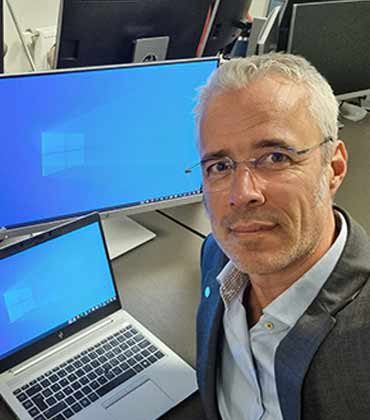
Tarje I. Wanvik
For the magazine CIOReview Europe, he shared invaluable insights on importance of sustainable, participatory urban planning, balancing diverse interests, and using AI as a tool while keeping human collaboration central to successful urban development.
1. Looking back on your career path to your current role leading the planning and building agency at Bergen Municipality, what experiences have shaped your professional journey and leadership approach?
My professional life has been strongly influenced by cooperation; strategic and tactical dialogue and negotiations both within and outside of organizations. There is no place I have worked where active dialogue, lively discussions and deliberations haven’t played a pivotal role in getting the job done.
Balancing the diversity of interests among the stakeholders of urban development is challenging, but first and foremost it is very rewarding. Being head of the planning and building agency in Bergen requires me to activate all my previous experiences: as communicator, as spin doctor, as researcher, as teacher, as consultant and campaigner. At the same time, I must be open to learning new things almost every single day, as I am running an agency stuffed with brilliant, enthusiastic minds with professional ambitions.
2. How do you integrate sustainable urban planning principles to address climate change while managing urban growth and development?
Sustainable urban planning principles have certain very useful properties. Combining social, economic and ecological sustainability considerations is a very practical exercise to secure a wide variety of interests in urban planning. The strategic ambition of my agency is to be an active partner to all our stakeholders. Hence, I activate sustainability as a tool to ensure stakeholder participation and professional embedding of urban planning activities.
More concretely, we are currently looking into new ways of developing business cases for retrofitting existing buildings, upcycle already used construction materials, transforming industrial sites into urban dwellings, and challenging various industrial sectors to provide recycled building materials.
These are developments that are taking place all over the world, but at different paces. We must learn from the best, be inspired and contribute with our own competencies and comparative advantages. Our task is to adapt our regulatory efforts to new ways of providing building materials and real estate developments, and to make these efforts worthwhile for both the developers and the local communities.
Correspondingly, we are limiting the harm done to nature in and around our cities. Both by regulating and protecting vulnerable species and landscapes, but also by concentrating urban developments around public transport hubs around the city.
3. What key challenges are you facing currently in your role, and how are you addressing them?
The key challenges facing me in my role are all related to maneuvering different interests in the field of urban development. Especially the nexus between politics, administration and private developers is a decisive focal point for me. I spend large parts of my working day advocating for a clarity of roles and responsibilities, in order to secure trust, transparency and predictability in urban development processes.
Urban planning must always remain a democratic exercise, built on cooperation and dialogue, ensuring participation, ownership, and enthusiasm as we shape our shared sustainable future together.
Private developers have their clear mandate to provide more or less affordable housing and at the same time provide reasonable profits to their owners. Public sector administration must provide transparent and fair rules and regulations for the common good and do the knowledge-based groundwork of political decisions. Finally, politicians have the privilege of weighing interests against one another and making decisions on behalf of us all.
All parties have their important role to play, and as long as we abide to these roles and the responsibilities that follows, we are increasing our chances of success.
4. What significant changes or innovations do you anticipate in sustainable urban development and governance over the next five to ten years?
Undoubtedly, artificial intelligence will be among the biggest change agents hitting the field of urban development in the coming years, and all the challenges that come with it. Human experience has always been closely connected to technological development, and AI is just the next level of technological challenge facing humanity on so many levels.
However urban planning should always, first and foremost is a democratic exercise, underscoring the value of collaboration, cooperation and dialogue. I strongly believe that people will nurture, love and protect the urban community that they have created themselves.
Hence, the tools we apply to make urban planning more efficient must never undermine our efforts to increase the level of participation, ownership and enthusiasm in planning processes! That’s why I believe human relations competence and deliberative democratic experiences will never go out of style for urban developers and planners. At least not in countries we would like to compare ourselves with.
5. What skills, mindsets, or experiences do you believe are essential for long-term success in sustainable development and public sector leadership, and how can aspiring professionals best develop them?
As public sector professionals, our goal should always be to strengthen and develop participatory, democratic processes in parallel with thorough, knowledge-based advice and services to the public. To live up to these high standards, aspiring professionals should nurture their love of people and human relations, paired with serious professional ambitions both in terms of the knowledge they acquire and the reach of their visions for the future.
To plan for the future is not an easy task, and it requires guts, competence, experience, creativity, and a visionary mindset. More than that, it requires collaboration and empathy, for the future is not something we see only for ourselves. The future is our common future, where we cannot be certain which role each of us will play. So, we better make sure to consider everyone.
The articles from these contributors are based on their personal expertise and viewpoints, and do not necessarily reflect the opinions of their employers or affiliated organizations.
